
Your Voice Matters in “Your Story” Contest
Readers everywhere are invited to help choose the winner in “Your Story,” an audiobook storytelling contest created through a collaboration between Spoken and Author Nation that spotlights twelve exceptional independent authors and the personal stories behind their work.
Readers Invited to Help Choose the Winner in “Your Story,” an Audiobook Contest that Celebrates the Story Behind the Story
Readers everywhere are invited to help choose the winner in “Your Story,” an audiobook storytelling contest created through a collaboration between Spoken and Author Nation that spotlights twelve exceptional independent authors and the personal stories behind their work. Through April 14, 2026, readers will play a pivotal role in selecting the Grand Prize Winner by streaming the finalists’ stories and submitting their scores online. (Listening is free.)
How Readers Can Participate
Readers can visit the “Your Story” landing page through April 14, 2026 to stream the finalists’ entries (most of which are under an hour) and submit their scores in the online form.
A Chance to Win VIP Access to Reader Nation 2026
Readers who participate by listening and submitting their scores will automatically be entered for a chance to win two VIP tickets to Reader Nation 2026 in Las Vegas this November. In addition to the opportunity to win, every listener’s participation directly supports independent authors by helping elevate new voices and bring attention to powerful stories that might otherwise go unheard.
The Finalists
The twelve finalists represent a remarkable range of voices and storytelling styles.
Dana Birkmour, author of The Becoming of Cernunnos, draws on ancient mythic traditions to explore transformation, divinity, and the cost of power. Her work reflects a deep belief that myth and storytelling are meant to be experienced through voice as much as through text, bringing ancient narrative traditions into modern listening formats.
Sonceree Best presents The Artist’s Duel, in which two painters compete to capture the essence of the same woman. Best explores the boundary between inspiration and possession – and the resolve required to define oneself beyond imposed narratives. Beneath the rivalry lies a deeper exploration of identity, self-definition, and claiming one’s own voice.
Steve Higgs, puts his mystery/thriller storytelling experience to good work in Never to Be Solved, which follows a detective on the last day of his career as he reflects on a thirty-year-old murder case he failed to solve. Higgs, a former British Army officer, invites readers to piece together clues and unravel a mystery that has lingered unresolved for decades.
Julia Huni contributes The Krimson Empire, a sweeping science fiction saga set across an interstellar stage of political intrigue, power struggles, and survival among rival factions in a distant empire. Huni drew upon her own experience as a military officer and the memory of what might have been.
Philip Keys offers The Accidental Teacher, a deeply personal memoir reflecting on a childhood shaped by a hidden cleft palate and the lifelong desire to be understood. His journey ultimately led him to become a teacher of teachers, transforming personal struggle into a career devoted to communication and connection.
Antoinette Klimek, author of Mother Tongue, explores language, identity, and generational connection in a story that began as a therapeutic exercise in grief and evolved into a tribute honoring love and longing for her cultural roots and a shared connection to her Vietnamese heritage.
Natalie McMillan presents The Minister and the Madness, a spiritually centered narrative that examines faith, doubt, and redemption while exploring the internal conflicts that arise when belief is tested. McMillan delivers a compelling exploration of spiritual surrender and the liberating power of faith in confronting life's challenges.
G.E. Perlin contributes Silent: The Listeners, a haunting narrative that begins as a playful ghost hunt and turns into a nightmarish clash with a dark force. As time fractures and memory bends, Perlin’s characters face questions of truth, love, and the terrifying power of forgetting.
AM Scott offers Do Retired Hellhounds Dream of Slower Squirrels, a story told from a canine’s perspective that blends humor with reflection as it explores aging, purpose, and the search for meaning after life’s most demanding roles begin to fade. Scott wrote this piece as part of a fundraiser to help an elderly woman remain in the only home she ever knew.
Morgan Sterling, author of What Remains Unreturned, presents a futuristic narrative examining loss, belonging, and cultural identity in a world where advanced technology cannot resolve the deepest human fractures. In this story, Sterling uncovers the isolation of clarity and what happens when the witness is not a savior.
Adam Strassberg brings PrayGPT, a provocative story that explores the intersection of faith and artificial intelligence, asking what might happen when powerful new technologies begin performing rituals once considered uniquely human. Strassberg’s own embrace of technology is translated through his characters’ curious exploration of what could be possible.
Gabriel Stroup presents Theodore Langley, a richly textured work of historical fiction that immerses readers in the moral complexities and social tensions of another era when a time traveler tries to rewrite history’s tragedies. Stroup’s thought experiment with this series explores the persistence of human nature and the ways in which knowledge endures.
Together, these finalists demonstrate the extraordinary diversity of contemporary independent storytelling, showcasing works that are imaginative, deeply personal, and reflective of the authors who created them.
Listen, Score, and Support Indie Storytelling
With just a short listening session, readers can discover remarkable new voices while helping shape the outcome of the competition.
Honorable mentions include the following authors and their works:
Bob Bello – Breath of Life
Kat Caldwell – Whistling Motherhood
Macaulay Christian – Children of Eternity
Nicole Frens — Flight to Tomorrow
D.B. Goodin – Out of Tune
Annette Grantham — Threads of the Heart
Deborah Gray –– Bravata Brat
James Robert Harper — No Mercy
Keith Hayden — Cereus & Limnic
Vee James –– Willam Rand’s Tale
Jason Kristopher — The Gurt Dug of New Bannockburn
D.M. Krulicki — Rift Rangers
Jennifer Lamont Leo — The House on Cherry Street
K. S. Lynn — A Thousand More
Theresa McEvoy — Where the World Remembers Her
Roger Mendoza — Loaded for Revenge
Blaine Moore — Charlie Needs Milk
Crystal Morgan – The Entitled Kid
Cassie O'Neal — Melt Into You
A.J. Reed — The Narrator's Story
Douglas Sjoquist — Through the Gap
Jeffrey Zyjeski — The Eigenstate Cascade
Spoken v1.10 Release Notes: Studio Reimagined
A Complete Passage Editor Overhaul. Precision Controls. Total Creative Authority.
Without question, Spoken v1.10 is one of the most transformative Studio updates we've ever released.
This is a complete structural redesign of how you interact with your manuscript, your voices, your audio — and now, your professional production ecosystem.
A Complete Passage Editor Overhaul. Precision Controls. Total Creative Authority.
Without question, Spoken v1.10 is one of the most transformative Studio updates we've ever released.
This is a complete structural redesign of how you interact with your manuscript, your voices, your audio — and now, your professional production ecosystem.
From a fully reimagined Passage Editor to Lexicon elevated into its own dedicated production step, complete audio version history (undo), intelligent split and join behavior, visual drag-to-set padding, a refined three-tier voice casting system, and the introduction of our new Producers tab — Studio just leveled up in a serious way.
Welcome to the new Spoken Studio. And while this release will feel monumental to anyone who works with digital narration… just wait for what’s coming next.
The All-New Passage Editor & Studio Interface
Studio’s Passages tab has been completely redesigned from the ground up.
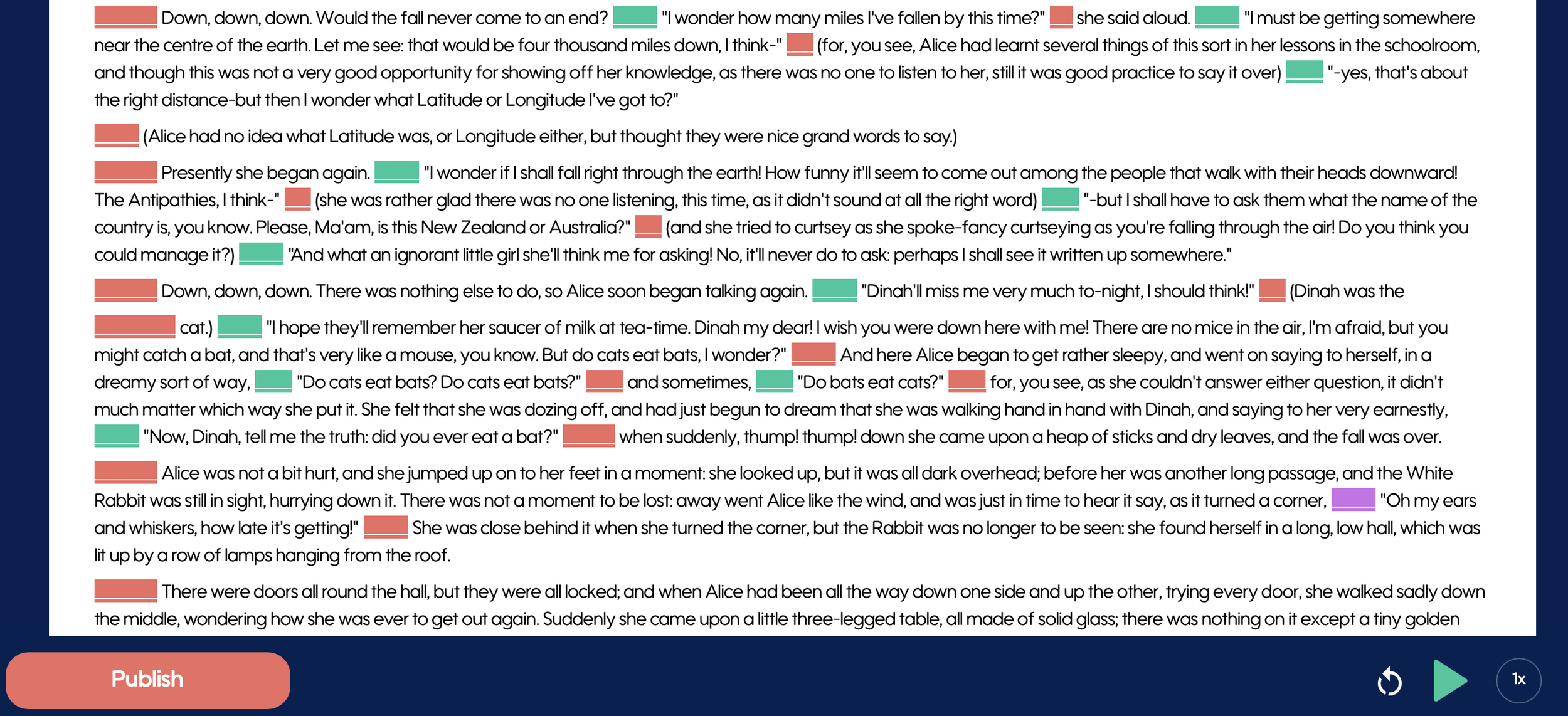
Your manuscript now appears with the visual integrity of a true writing workspace — familiar, fluid, and readable — while preserving Spoken’s powerful passage-level control system underneath.
What’s New:
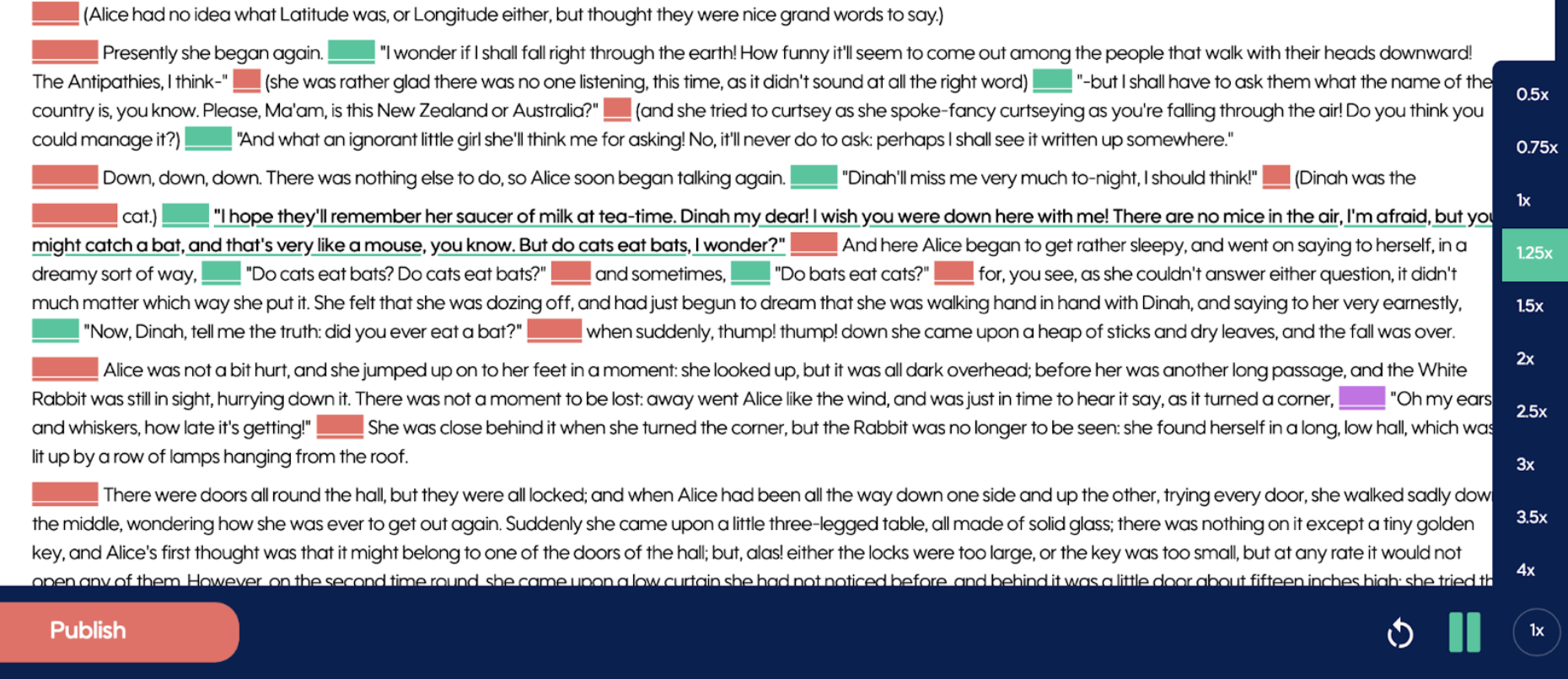
Full manuscript continuity view — your story reads naturally, like it would in your writing platform.
Color-coded padding indicators remain, but are now integrated seamlessly into the layout by way of Padding blocks beside the text.
Passages requiring narration display subtle black underline indicators on the Padding icons and low-opacity text.
Narrated passages appear in full dark type for immediate visual confirmation.
Integrated audio player per passage with:
Visible MP3 length
Scrubbable waveform control
Instant proofing and precision playback
Editing is faster. Proofing is cleaner. The text-to-audio workflow is truly seamless.
Spoken is your browser-based narration production studio.
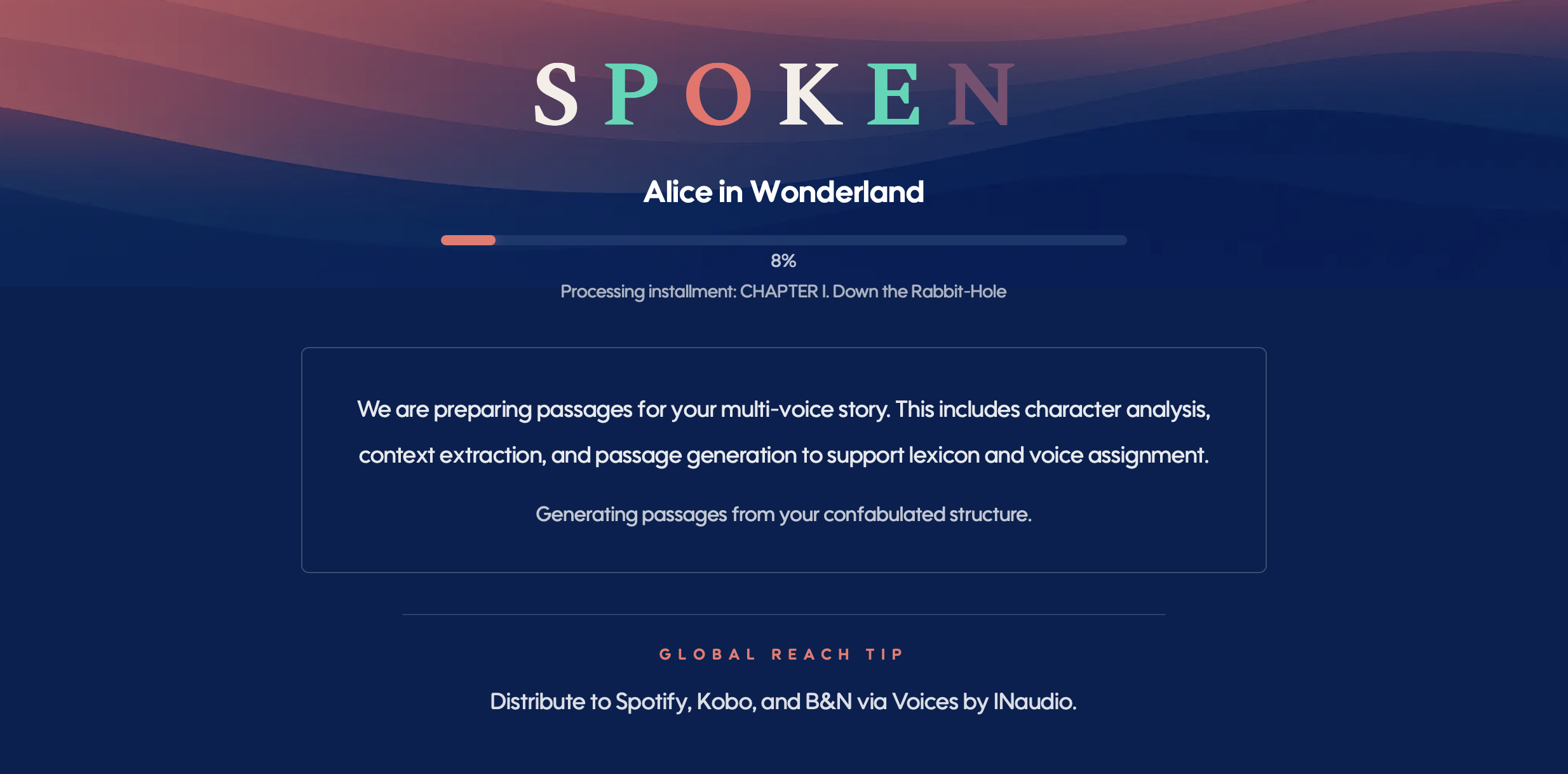
Passage History & True Audio Undo
You asked for it. We built it.
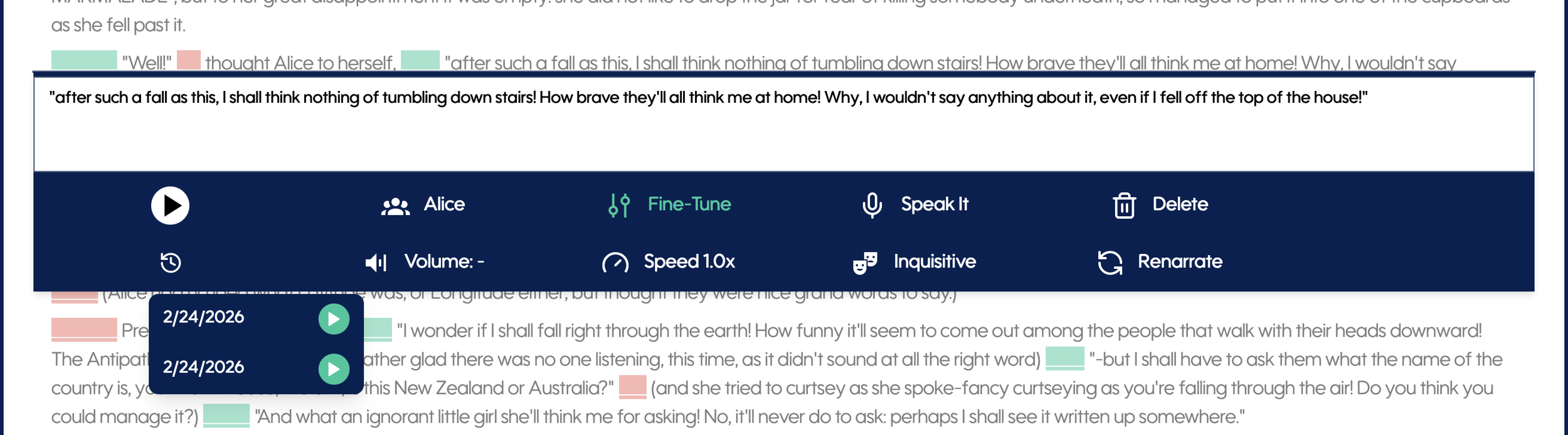
Every change made to a passage now stores its prior MP3 versions in Passage History.
You can now:
Revert to any prior audio take
Experiment freely without fear
Restore a previous performance with confirmation
“Change the audio file of this passage to the version from 1/28/2026?”
Refinement is no longer destructive. It’s creative.
Lexicon Is Now Its Own Dedicated Studio Step
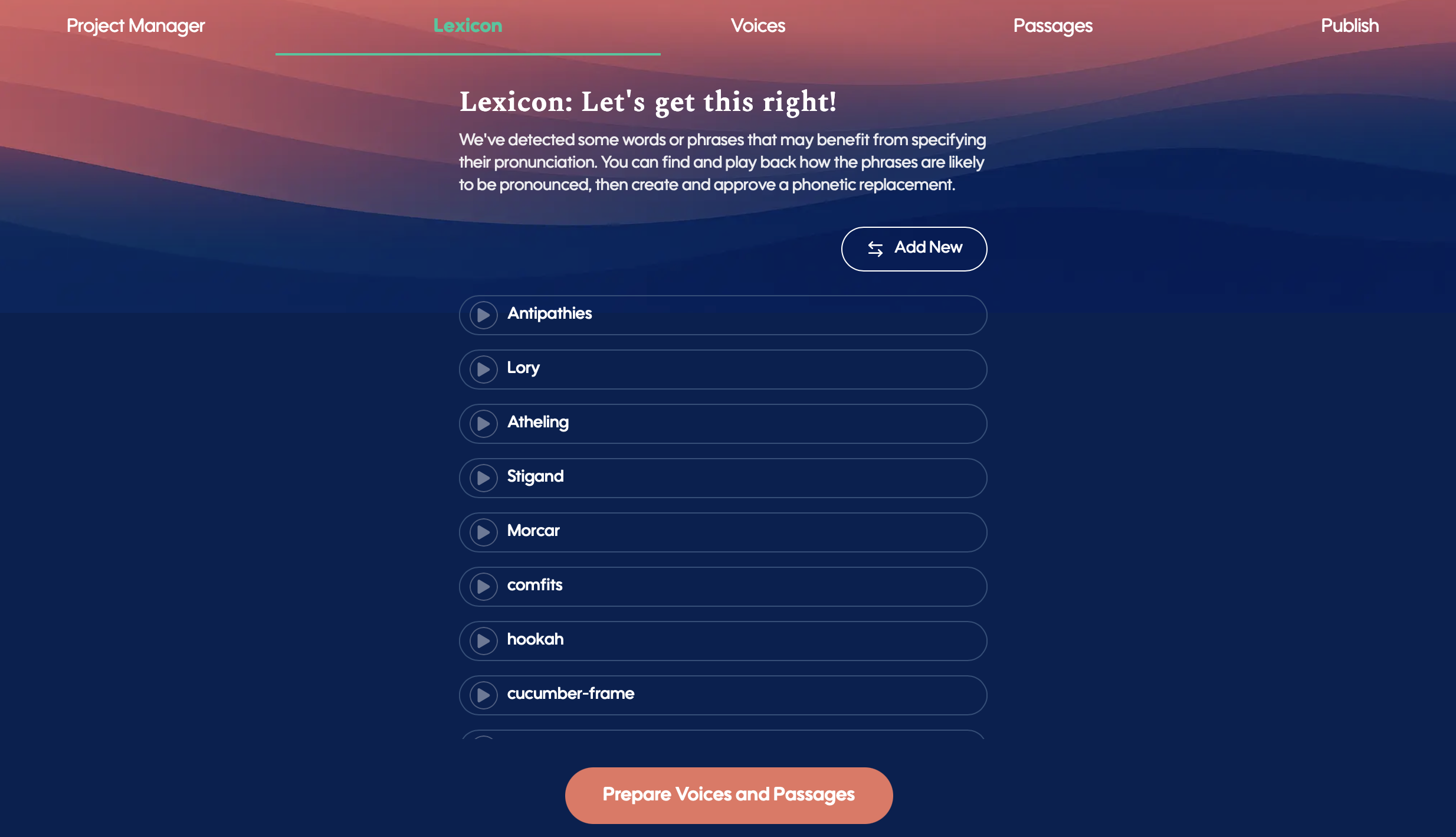
Lexicon has been elevated into a full Studio tab.
Before you ever reach passage editing, you now have global control over:
Difficult names
Unusual spellings
Fantasy terminology
Tricky phonetics
The refined Lexicon system identifies and isolates the words that truly need attention, giving you manuscript-wide pronunciation control at the highest level, long before you ever reach your passages.
This is Spoken doubling down on helping authors prepare their story for the best possible digital narration result — while honoring exactly how they wrote it.
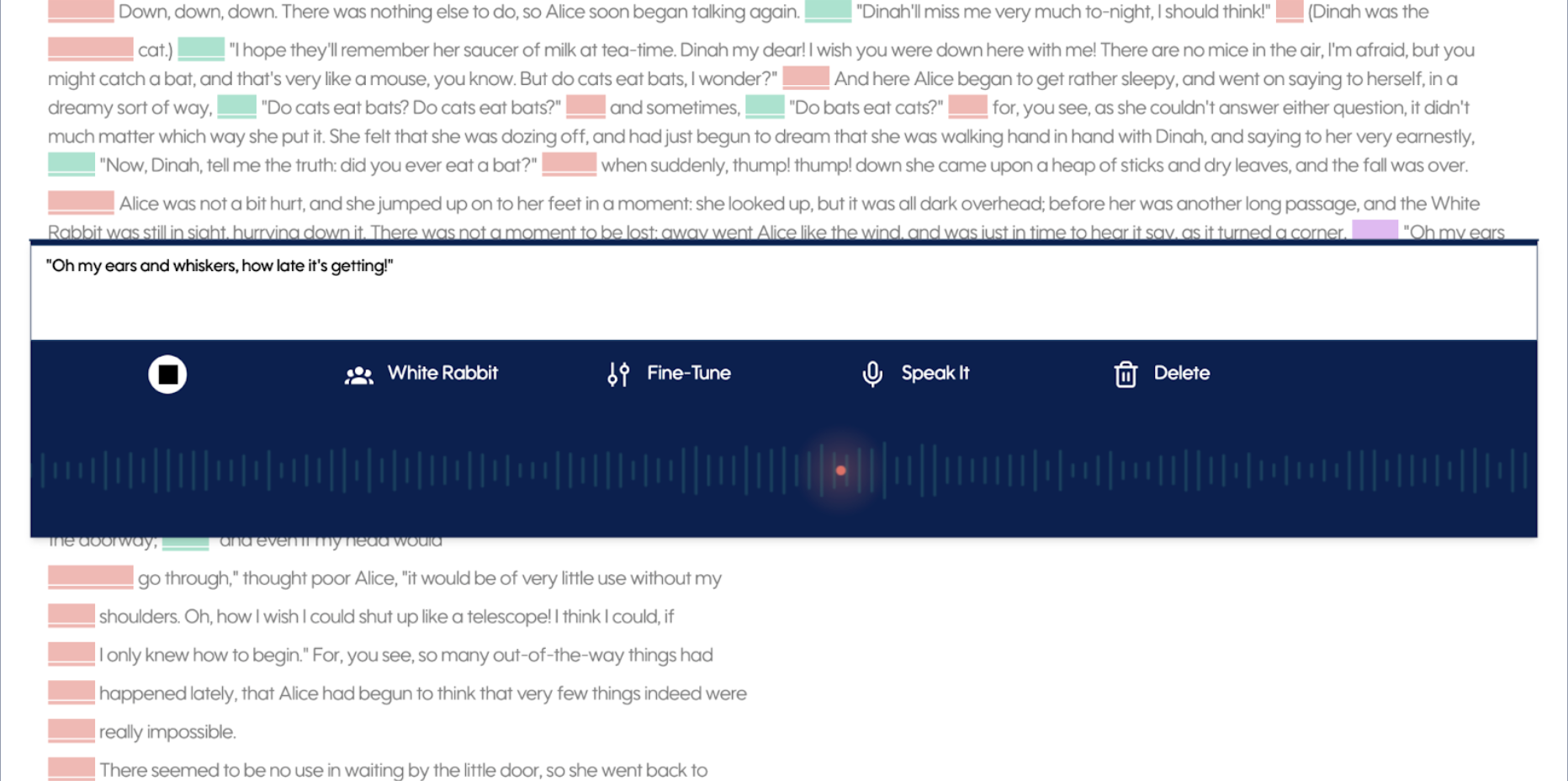
Visual Padding Control — Drag. Set. Done.
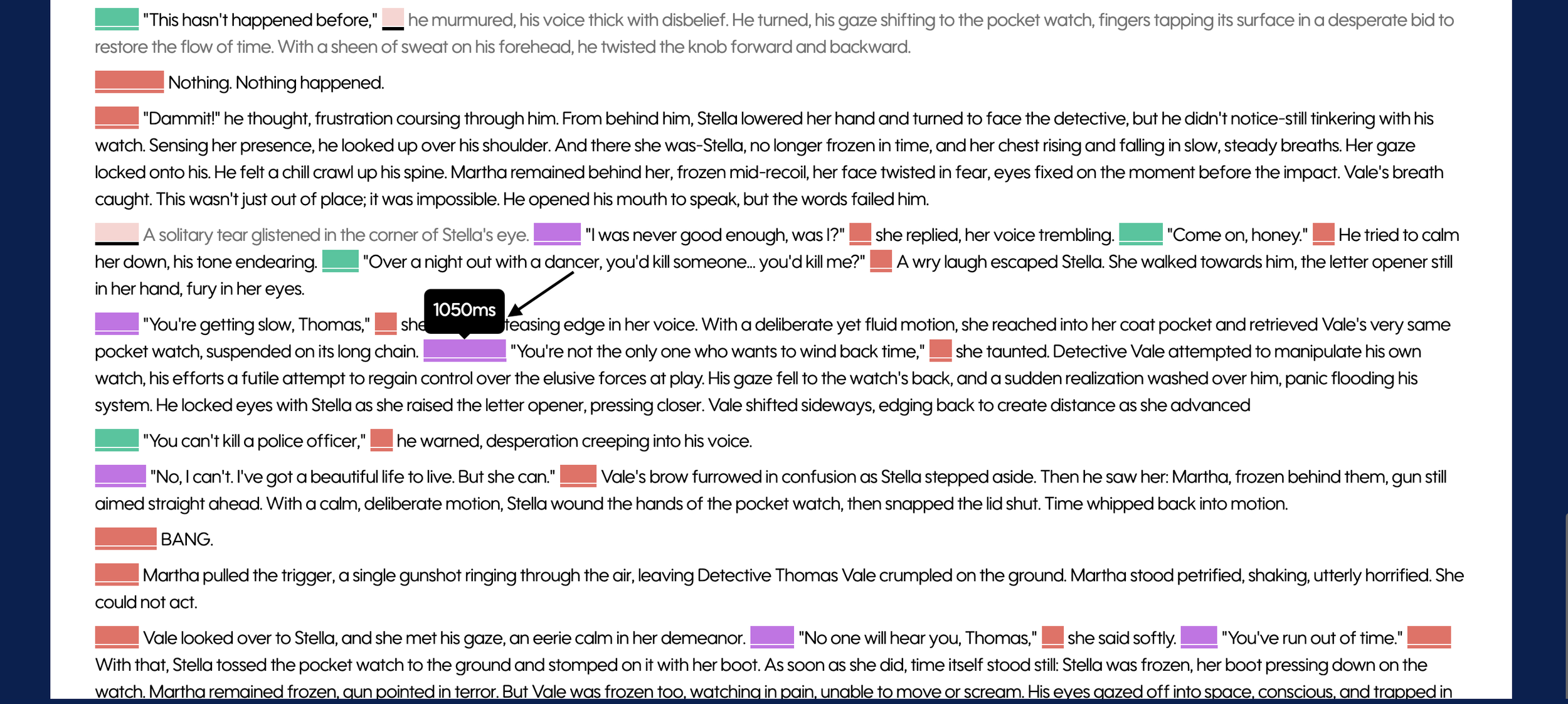
The milliseconds of pause before a passage begins are now represented as a visual, color-coded block beside the passage — aligned to the speaking character.
You can now:
Click
Drag
Adjust padding in real time
Timing is now instant and tactile. No manual updating after padding changes is needed.
Precision Playback
Editing audio inside Studio now feels dramatically more tactile.
Every narrated passage now includes an integrated waveform player directly inside the Passage Editor. You can see the exact duration of the generated MP3, scrub through the waveform with precision, and instantly review specific moments without replaying the entire passage.
Experiment with delivery. Compare takes.
Smarter Split & Join Behavior
Editing passages is now intelligent, intentional, and safe.
Split Behavior:
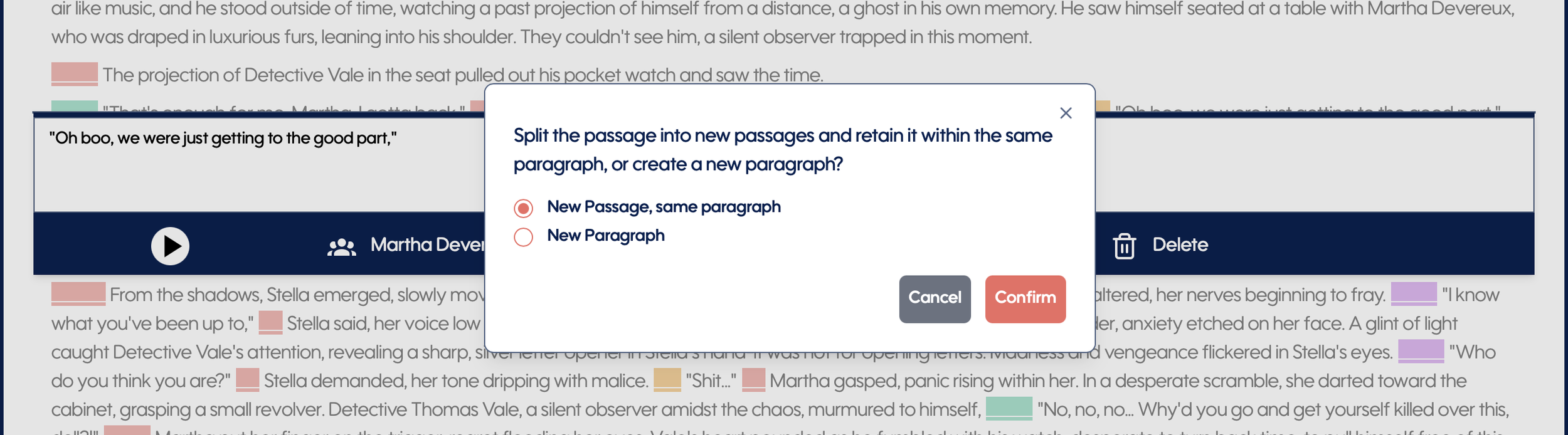
When splitting a passage, you can choose:
New passage, same paragraph
New paragraph
If you create a blank passage at the beginning or end, the original passage remains untouched — and will not be marked for re-narration if it already has audio.
If you split within text, you’ll be guided through whether you want structural separation or paragraph distinction.
Join Behavior:
Joining passages now behaves contextually:
Joining paragraphs keeps passages intact and preserves MP3 histories.
Merging two passages into one requires confirmation and re-narration — clearly stated before proceeding.
Three-Tier Voice Selection System
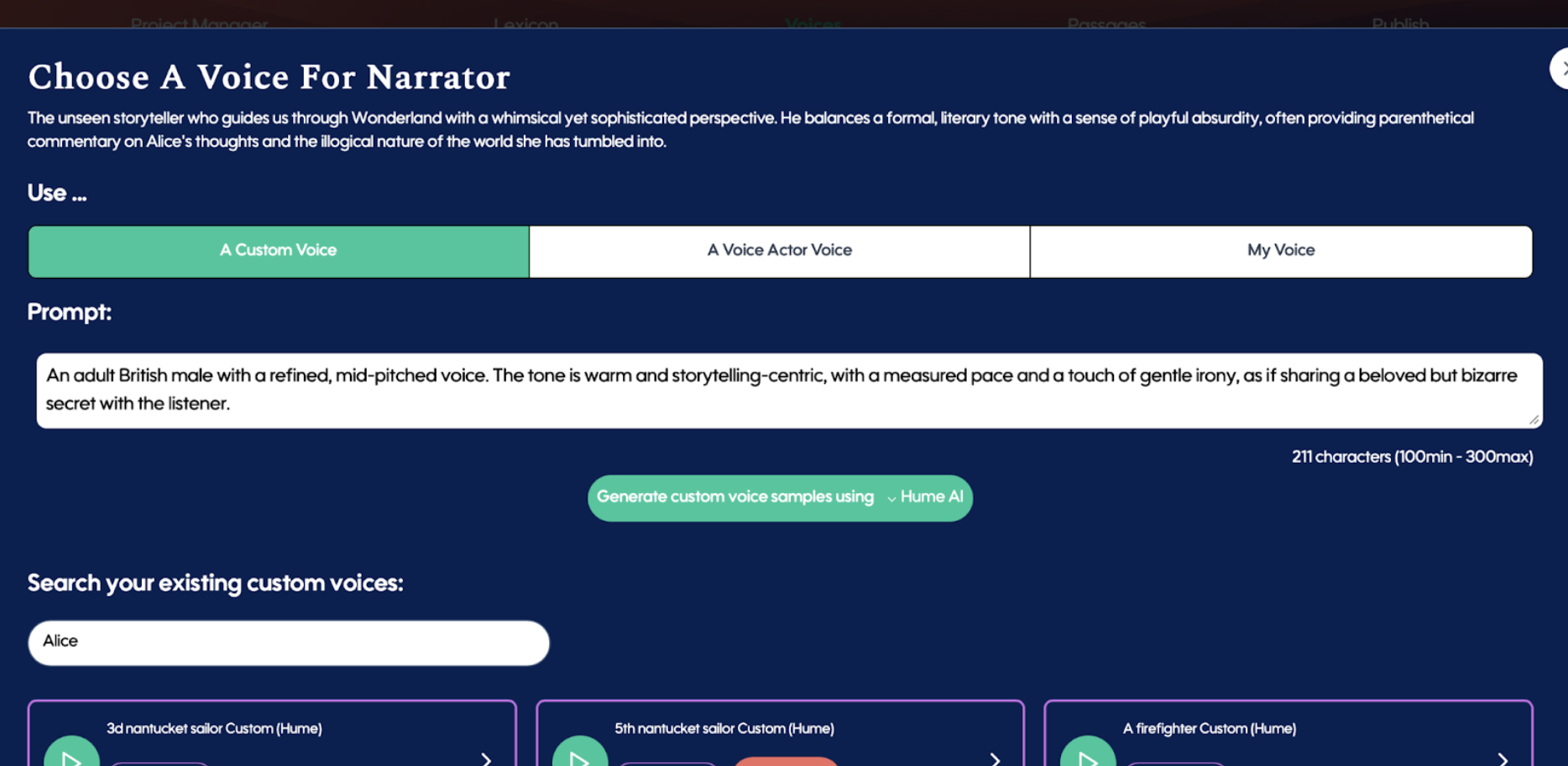
Voice selection in Studio has been completely clarified and streamlined into three distinct paths:
Custom Voice
Prompt-based discovery
Three sample generation
Search your existing custom voices
Voice Actor Voice
Standard finder tools
Enhanced vector “Best Match” suggestions
My Voice
Use My Personal Voice Clone
Create My Personal Voice Clone
Manage My Personal Voice Clone
Voice casting is now cleaner, clearer, and faster.
Click-to-Profile Character Navigation
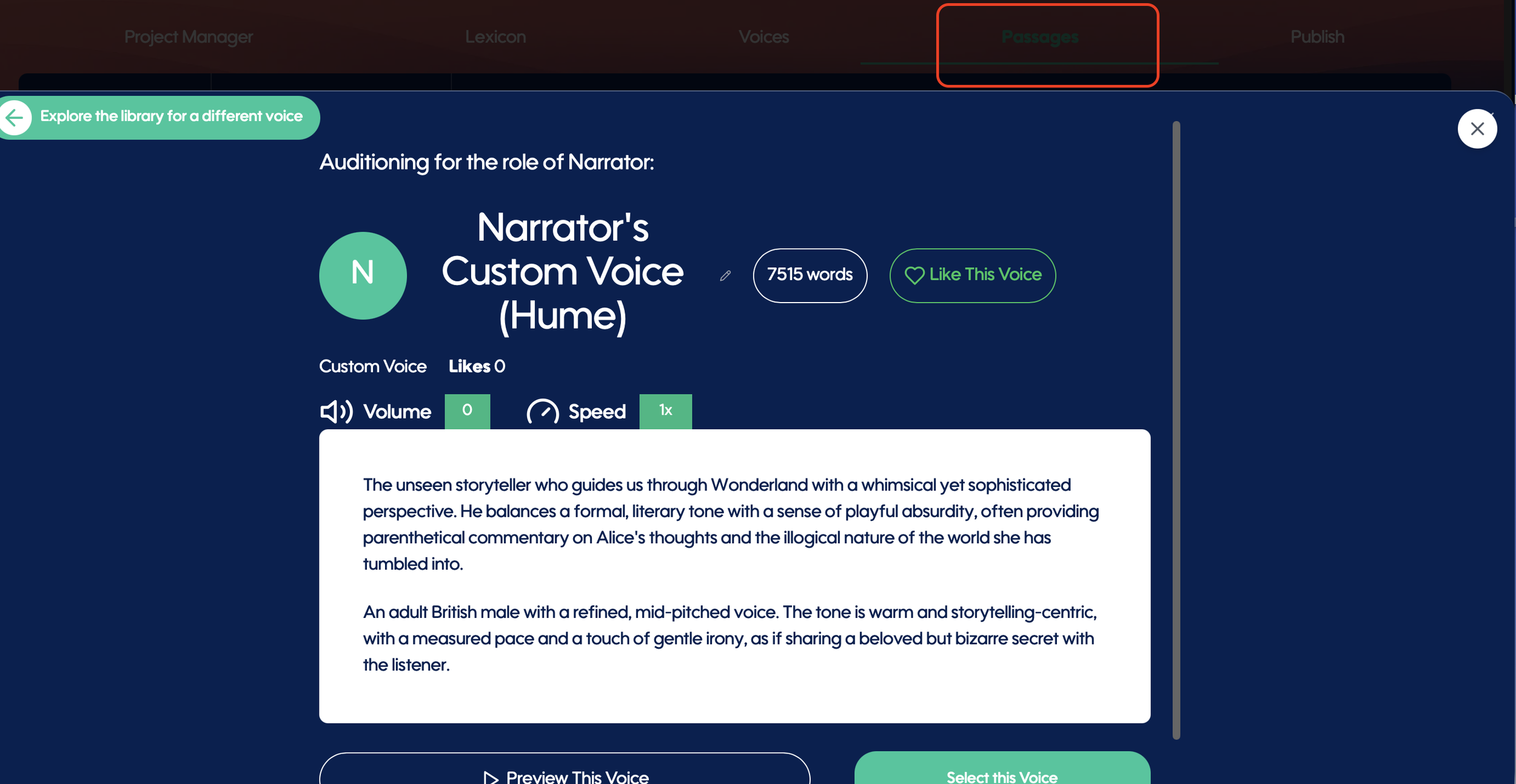
Clicking a character name at the top of the Passages tab now opens that character’s voice profile directly.
No more jumping to the Voices tab and searching manually.
Character-to-voice relationship is now immediate and fluid.
Installment-Level Speed Control — Review Faster
When proofing an entire installment, you can now adjust playback speed on the fly.
Speed up narration to review structure and flow.
Slow it down to inspect tone and pacing.
For long-form authors especially, this dramatically reduces proofing time and keeps you inside your workflow.
“Want Help?” — Professional Support, Built Into Spoken
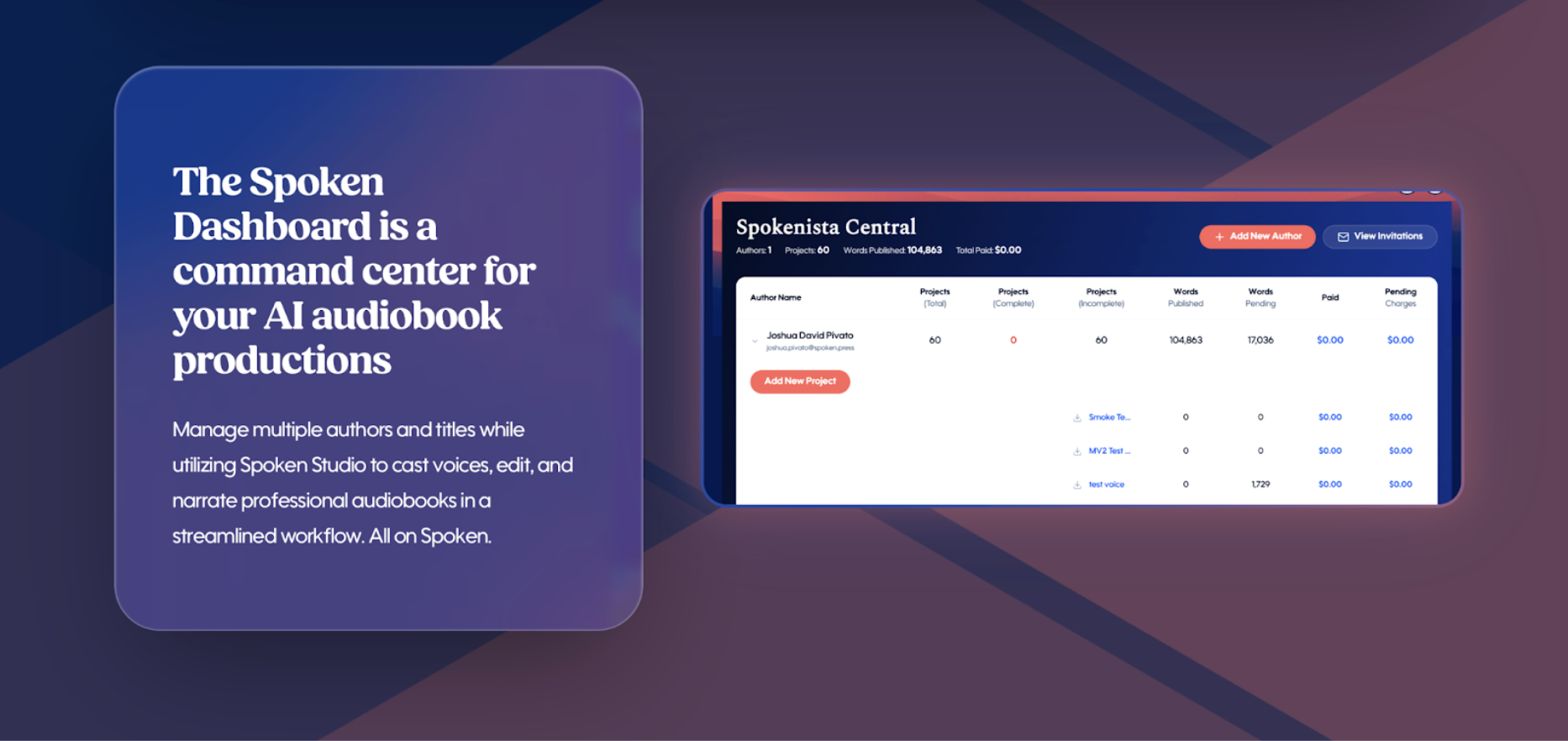
With the launch of the Spoken Dashboard, we opened our official Producer Submission Page, inviting experienced audio professionals to apply to become part of the Spoken Producers Network.
Spoken Producers receive access to advanced tooling inside the Dashboard and are certified in working within Spoken Studio, ensuring they understand the platform deeply and can elevate projects with precision.
Now, that ecosystem connects directly to authors.
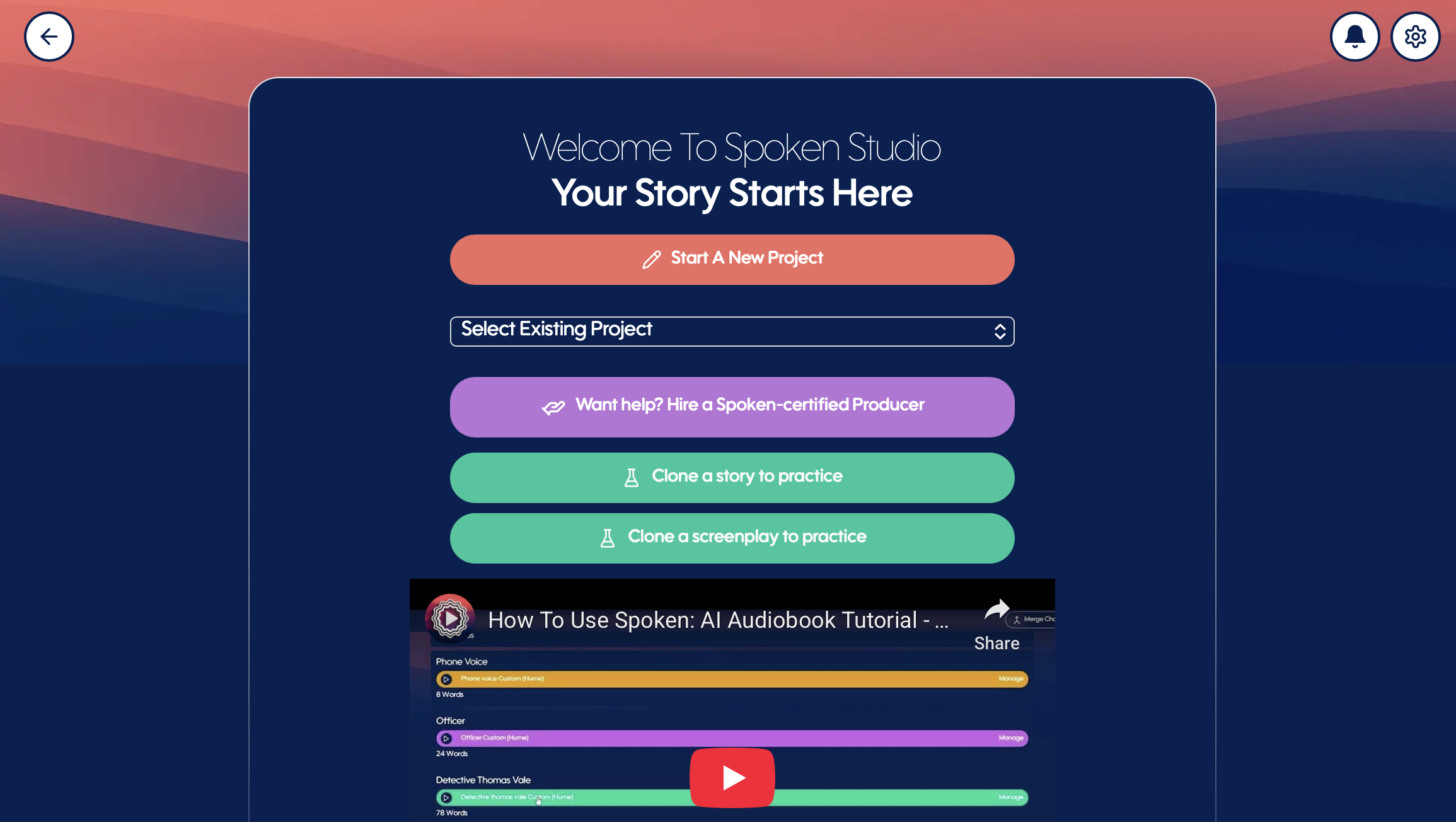
Inside the Create page, you’ll now see a new “Want Help?” button.
For authors who:
Feel stuck at any stage
Don’t have time to complete production
Want a truly professional ear on their project
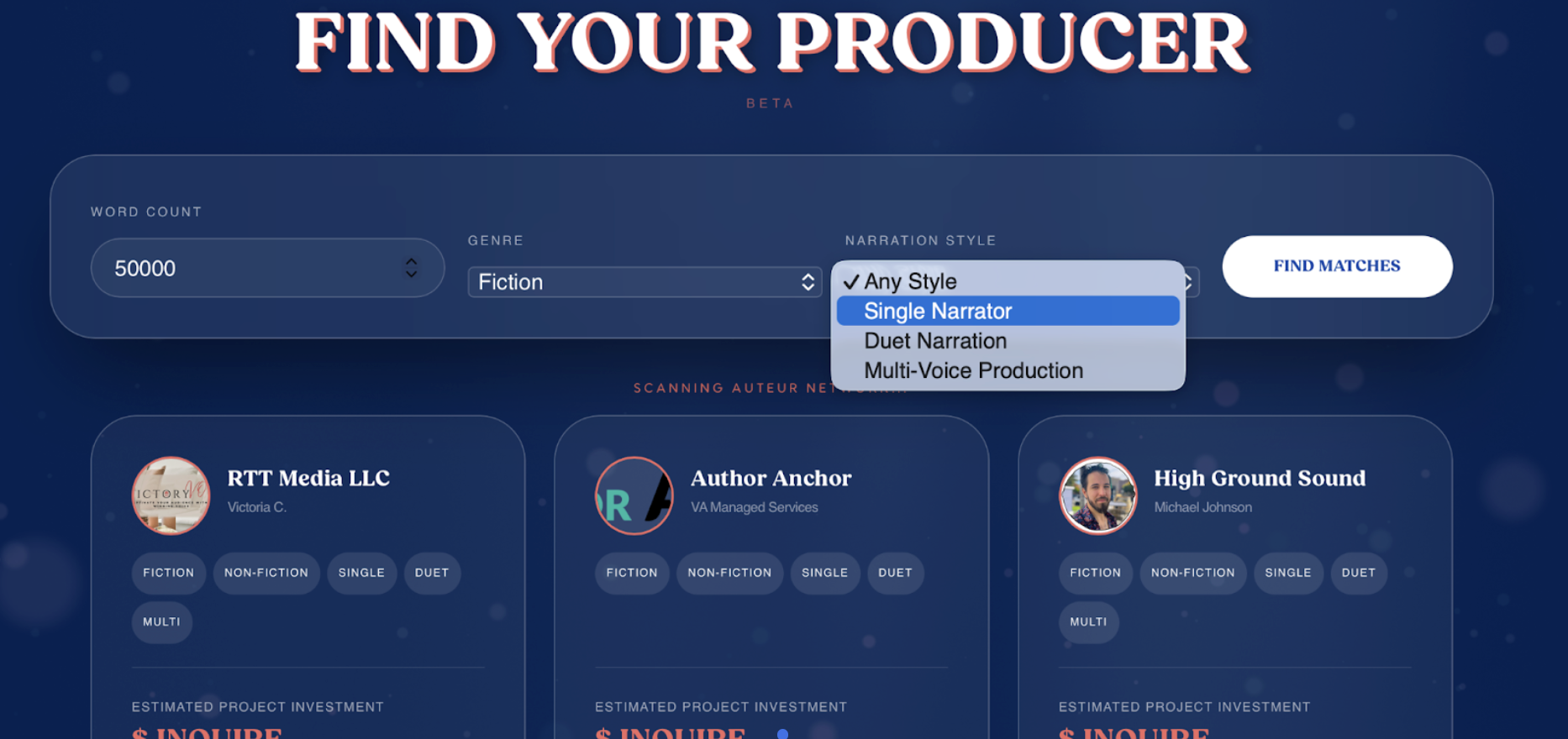
You can click Want Help? and browse a curated list of Spoken-certified Producers.
These are qualified experts inside Spoken Studio — professionals who understand digital narration, pacing, voice direction, proofing, and final preparation for distribution. Authors can review, inquire, and engage directly based on their project’s needs.
What This Means for Existing Projects
All previously created projects will remain structurally intact.
Your passages will continue to appear separated passage-by-passage, just as they were originally built, now enhanced with the new visual padding controls.
Nothing about your existing narration structure is being rewritten or merged automatically.
For new projects created in v1.10, paragraph integrity is preserved from the start, allowing your manuscript to flow more naturally while still maintaining passage-level control.
In short:
Your past work is safe.
Your new work is more fluid.
And you’re in control of how either one evolves.
The Bigger Picture
Spoken v1.10 is the next chapter of Studio experience. We’ve brought new life to how you interact with:
Your pacing
Your pronunciation
Your structural formatting
Your voice casting
Your audio revisions
Your manuscript integrity
It’s a refresh and re-engineering of how Studio feels in your hands.
Spoken has always believed the serious self-publishing author deserves professional-grade tools.
Welcome to the new Studio. You won’t believe what comes next…
Spoken v1.09 Release Notes: ePUB Support, AI Intelligence Upgrades & Workflow Acceleration
Industry-grade inputs. Smarter analysis. Faster paths to narration.
Stepping boldly into 2026, Spoken v1.09 introduces one of our most important upgrades to date: full ePUB support for manuscript uploads, alongside major intelligence and workflow enhancements across Studio.
This release closes the gap between professional publishing prep and audiobook production, giving authors a cleaner, more direct path from finished manuscript to narrated work.
Industry-grade inputs. Smarter analysis. Faster paths to narration.
Stepping boldly into 2026, Spoken v1.09 introduces one of our most important upgrades to date: full ePUB support for manuscript uploads, alongside major intelligence and workflow enhancements across Studio.
This release closes the gap between professional publishing prep and audiobook production, giving authors a cleaner, more direct path from finished manuscript to narrated work.
ePUB Manuscript Support — A Direct Path from Publishing to Narration
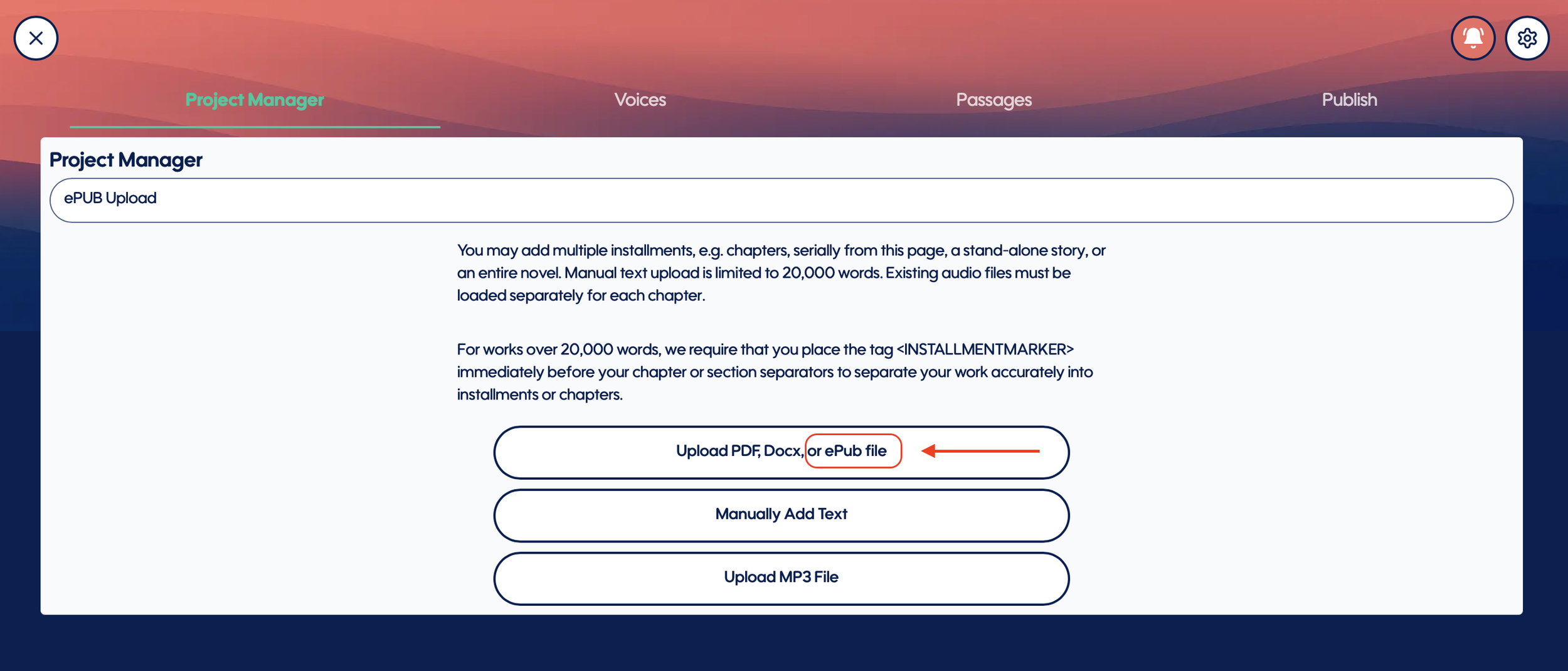
Spoken now supports ePUB files for manuscript upload.
This means your industry- and distribution-grade manuscript preparation can flow directly into Spoken — no reformatting, no manual restructuring, no special tags required.
With ePUB uploads:
Chapters are automatically identified and structured
The <INSTALLMENTMARKER> tag is no longer needed
Non-narration elements (images, metadata, formatting artifacts) are intelligently removed
Only the content required for narration moves forward
Your professionally prepared ePUB is now the cleanest, fastest, and most reliable way to bring a book into Spoken for narration.
Smarter Studio — Intelligence at Every Step
Spoken Studio now operates with a significantly more advanced, context-aware intelligence system.
This upgrade enhances how Studio understands your work end to end — from story and character analysis to tone detection, pacing, emotional cue tagging, and even high-level “uber summaries” of your narrative.
These improvements touch nearly every part of the creative workflow.
Selective Confabulation — Build Only What You Need
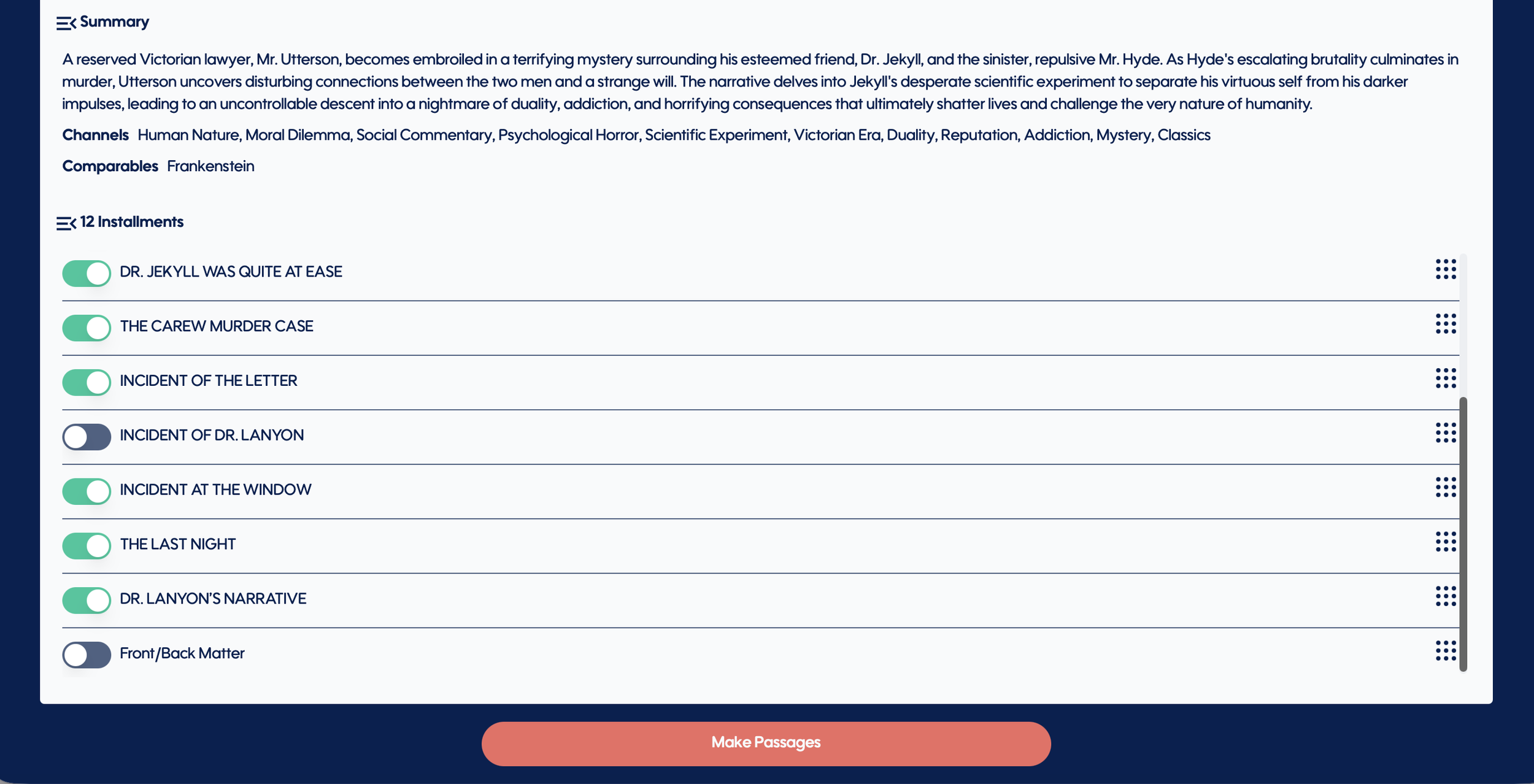
After uploading your manuscript and completing analysis, you can now select exactly which installments (chapters) you want to confabulate before moving into voice casting and narration.
Confabulate — the stage where Spoken parses your text, identifies characters, and prepares narration structure — is no longer all-or-nothing.
This gives you:
Fine-grained control over how and when parts of your book are prepared
A powerful workflow for serialized releases
An easy way to create first-chapter teasers or samples
Less manual work separating manuscripts upfront
You decide how your project unfolds — chapter by chapter, at your own pace.
Improved Playback — Faster Proofing, Less Interruption
Installment-level playback has been significantly improved.
Previously, if narration was in progress anywhere in your project, playback could be blocked across the board. Now, if narration is happening outside the installment you’re viewing, you can still preview and proof your content freely.
This makes review faster, smoother, and far less disruptive — especially in larger or more complex projects.
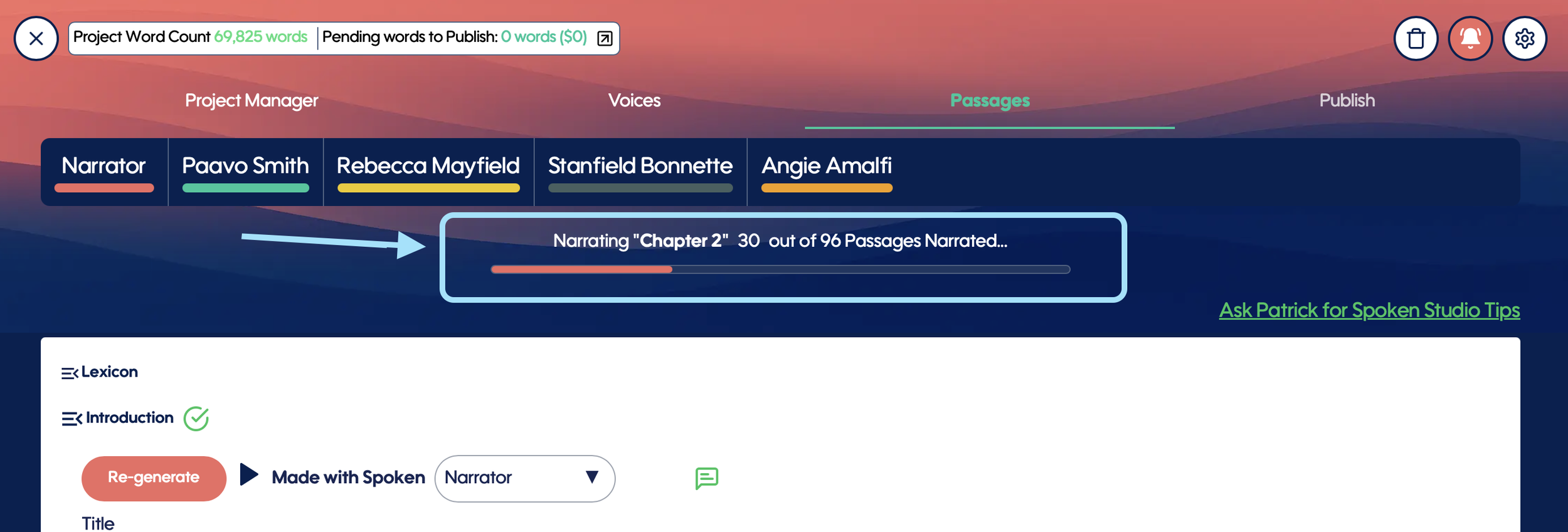
Narrate Multiple Chapters at Once
For authors ready to move quickly, Spoken now allows you to initiate narration for multiple installments in parallel.
This means:
Faster overall production
Less waiting between chapters
A smoother path from draft to publish
Perfect for ambitious authors looking to complete and release their work efficiently.
Closing Credits — Distribution-Ready by Default
Every Spoken project now automatically ends with a static Closing Credits installment.
This clearly signals the end of the work and provides a dedicated chapter MP3 required to pass quality control for several digital narration distributors.
Getting your audiobook everywhere it needs to go — cleanly, correctly, and without friction — remains one of Spoken’s highest priorities.
Listen to this example of our new Closing Credits
Looking Ahead
Spoken v1.09 is about meeting you where you are — with smarter systems, more flexible inputs, and fewer blockers along the way.
Spoken in 2026 is faster, more intelligent, and more author-driven than ever before.
And this is just the beginning.
By Storytellers. For Storytellers.
We believe that giving voice to writing isn’t just for those with resources to create elaborate productions or patience to navigate complex publishing hoops. Spoken was created by a small team of storytellers based in Portland, Oregon who believe in empowering self-publishers.